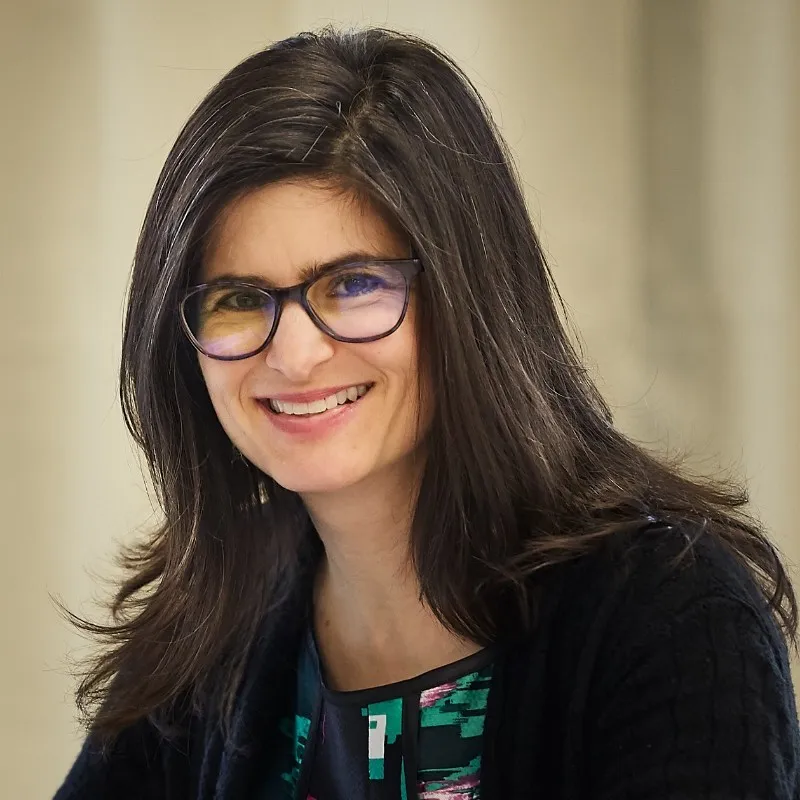
Julia grew up in a family with deep STEM roots - her father was a crystallographer (someone who studies the structure of crystals and materials) and her mother was a chemistry teacher. With three generations of PhDs in her family, science felt like a natural path, though Julia also loved music.
Julia studied General Engineering at Harvey Mudd College, and during her studies, a course on materials science sparked a fascination with designing materials that have very specific properties - the foundation for her PhD in Materials Science, where she researched special metal alloys used in electronics.
“A “career in STEM” isn’t just one thing - there are countless ways to contribute.”
After graduating, Julia worked as an engineer in the semiconductor industry - the industry that makes the tiny computer chips found in almost every device we use. When she needed a more flexible schedule for her young children, she transformed herself into a journalist, spending a decade writing for trade magazines about the semiconductor industry. During this time, she also began teaching music to children, eventually growing a small pilot programme into one that reached three hundred students.
Eventually, Julia returned to her engineering and writing roots, founding her own company, JLFG Communications, which helps manufacturers - particularly those focused on sustainability - tell their stories effectively. She has since written four books about sustainable manufacturing and the responsible use of materials, with several receiving awards and recognition.